With these examples, discover how Google SGE addresses search queries, prioritizes publishers, and reshapes the future of information discovery.
1,762 views
Google’s New Generative AI-Powered Search Experience
Google has begun rolling out the new Google Search experience (Search Generative Experience, or SGE for short) to those on the Search Labs waitlist. Unfortunately, it is currently limited to American users. I hope it will be active in Turkey shortly.
SGE adds productive AI features to Google Search results. You can see first impressions of SGE on desktop and mobile and how SGE results compare to typical Google SERP features in this Search Engine Journal article.
I suggest you read Barry Schwartz’s article on his first impressions.
For example, Google SGE gave six reference sites when answering “What is Bard?”. Five of the six Google Bard references were from publishers, while one was the official Google Bard Help page.
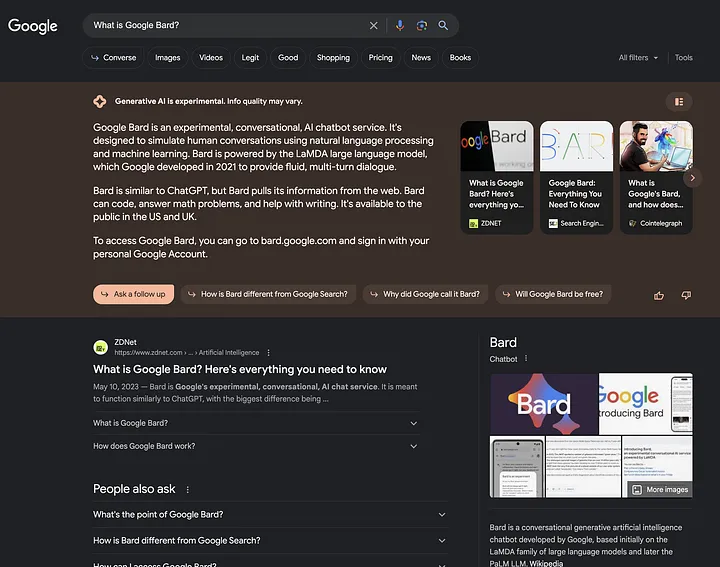
As you can see, shortly, users will encounter productive AI-assisted results in Google search results. We do not need to be a soothsayer to predict that this situation will decrease organic site traffic. We must explain this situation well to our consultancy clients and look for alternative methods to turn site visitors into loyal users.
One of them may be that each company places its ChatGPT-supported chatbot on its website and tries to answer all the questions of the users not only about their company but also about the sector. Undoubtedly, this will rapidly increase the number of loyal visitors.
I will share my thoughts on these issues in the coming weeks.

These May Also Interest You






Make Stradiji a preferred source on Google
Google lets you pick the sources you want to see more of. Add Stradiji and our articles show up more often for you in search results and AI answers.
Add Stradiji on GoogleThe SEOs Diners Club
Every week, Mert Erkal breaks down what changed in SEO, GEO and AI search, backed by real tests and data. It's free.
Subscribe for freePopular Posts
The SEOs Diners Club · Weekly newsletter
Every Monday: what's actually moving in SEO and AI search
Mert Erkal breaks down one big shift each week, backed by real tests and data.
Free · 247 weekly issues since 2022 · Unsubscribe anytime
