What still ranks pages on Google in 2026, what AI Overviews and ChatGPT cite, and where the two overlap. See the side-by-side table, then score your site.
Popular Posts
Latest Articles
4,668 views
Google Ranking Factors in 2026 (and What AI Citations Add)
Some links in this post are affiliate links. If you buy through them, Stradiji earns a commission at no extra cost to you.
Last updated: November 1, 2026
Summary
Google ranking factors in 2026 are still the same core trio: relevance to the query, quality and trust signals (what Google calls E-E-A-T), and authority from links and brand demand, all gated by whether Google can crawl and index the page. AI citations in AI Overviews, ChatGPT and Perplexity sit on top of that foundation. They lean harder on brand mentions across the web, on freshness, and on passages a model can lift cleanly. If your SEO is weak, your GEO will be weak too. If your SEO is solid, GEO is mostly the extra 20% on top.
Why we rewrote this post
A post titled after a dated study dies with the study. People search for “google ranking factors” (2,400 monthly US searches, keyword difficulty 67, per Semrush), not “2024 ranking factors.” So we rebuilt the page around that question and added the half of the story that didn’t exist in 2024: AI citations.
What the Semrush study found, and where it has aged
One warning up front: as of Nov. 1, 2026, we could not find a newer edition. The latest Semrush ranking factors study is still the one Marcus Tober published on Jan. 4, 2024. Treat it as a dated snapshot.
The method: 16,298 English keywords, top 20 results each, a correlation score per factor. Correlation, not causation, and Semrush says so.
What held up well:
- Relevance and content quality sat near the top, measured with word embeddings rather than keyword counts.
- Direct (branded) traffic share correlated with rankings. People typing your brand name is hard to fake.
- Links from many different domains still mattered at page and domain level.
- Core Web Vitals and HTTPS correlated weakly. They are table stakes, not differentiators.
What it can’t tell you: anything about AI Overviews, AI Mode or ChatGPT citations.
What Google itself says ranks pages
How Search works (updated Dec. 18, 2025) describes three stages: crawling, indexing and serving. Relevance at serving time is “determined by hundreds of factors,” including the user’s location, language and device.
The helpful content guidance (updated Oct. 5, 2026) says Google’s ranking systems are designed to prioritize “helpful, reliable information that’s created to benefit people.” On E-E-A-T it is blunt: “Of these aspects, trust is most important.” The same page says the core ranking systems “look to reward content that provides a good page experience.”
And for AI features, Google’s AI features and your website page (updated Dec. 10, 2025) says there are “no additional requirements to appear in AI Overviews or AI Mode, nor other special optimizations necessary.” To appear as a supporting link, a page must be indexed and eligible to show with a snippet. That is Google telling you, in writing, that SEO is the foundation of GEO. We made the longer version of that argument in Is SEO dead?
What the 2024 API leak added
In May 2024, more than 2,500 pages of internal Google Search API documentation, with 14,014 attributes, leaked. Rand Fishkin broke the story at SparkToro and Mike King published the first deep technical read at iPullRank. Google confirmed to The Verge on May 29, 2024 that the documents were real, while warning against assumptions based on “out-of-context, outdated, or incomplete information.”
Three takeaways we use:
- Clicks matter. King describes NavBoost as a system that “employs click-driven measures to boost, demote, or otherwise reinforce a ranking.” Titles that earn the click matter.
- Site-level authority exists. The docs reference a
siteAuthorityattribute. How it’s computed is unknown. - Dates are parsed from several places. The docs list a byline date, a date from the URL or title, and a date derived from the content. King’s advice: keep one consistent date across structured data, titles and sitemaps.
Our rule: the leak shows attributes, not weights. Use it to confirm direction, never to justify a magic trick.
Classic ranking signal vs. what AI citations reward
This is the table we use when a client asks, “Do we need a separate GEO strategy?” The middle column is the foundation. The right column is what gets added.
| Signal | What helps you rank on Google | What AI citations reward on top |
|---|---|---|
| Relevance | Page matches query intent; embedding-level relevance (Semrush, 2024) | Matches the many sub-queries an AI system runs. Google calls this “query fan-out” (Google, 2025) |
| Links and authority | Links from many referring domains; site-level authority (2024 leak) | Backlinks correlate only weakly with AI Overview brand visibility: 0.218 (Ahrefs, 2025) |
| Brand and entity | Branded search and direct traffic correlate with rankings (Semrush, 2024) | Branded web mentions show the strongest correlation, 0.664 (Ahrefs, 2025). The model has to know you before it searches |
| Content quality, E-E-A-T | Helpful, people-first content; trust is most important (Google, 2026) | Same, plus a named, checkable source a model can attribute a claim to |
| Freshness | Matters for time-sensitive queries; consistent dates (2024 leak) | AI assistants cite content 25.7% fresher than organic results; Google AI Overviews are the exception (Ahrefs, 2025) |
| Structure and extractability | Clear headings help snippets and featured snippets | A self-contained answer passage a model can lift. In one 60-chat analysis, only 3.1% of retrieved pages were cited |
| Technical access | Crawlable, indexable, renders in Googlebot | Most non-Google AI crawlers don’t execute JavaScript (Vercel, 2024). robots.txt rules for each AI bot decide eligibility |
| User signals | Clicks feed systems like NavBoost (2024 leak) | No public evidence yet; we track AI referral conversions instead |
Two numbers explain why the left column still matters. BrightEdge found that 54.5% of AI Overview citations came from pages that also rank organically as of September 2025, up from 32.3% at launch in May 2024. Most of that overlap came from positions 21 to 100, and only 16.7% of citations came from top-10 results. Translation: you need to be in Google’s index and in the conversation, but you don’t need to be No. 1 to be cited.
The other number cuts the other way. In Ahrefs’ study of 75,000 brands (May 26, 2025), branded web mentions correlated with AI Overview visibility at 0.664, versus 0.326 for Domain Rating and 0.218 for backlink count. Links build rankings. Mentions build the model’s memory of you. We broke down how that memory shapes ChatGPT’s shortlist in ChatGPT decides before it searches.
On freshness, Ahrefs analyzed about 17 million citations and found AI assistants prefer fresher content (July 28, 2025), with Google AI Overviews the one exception. So “update everything weekly” is not a strategy. Update what’s actually stale.
On technical access, Vercel reported in December 2024 that “none of the major AI crawlers currently render JavaScript,” naming GPTBot, ClaudeBot and PerplexityBot. Gemini uses Googlebot’s infrastructure, so it does. Content that loads client-side may be visible to Google and invisible to ChatGPT.
Want both columns handled by one team?
We run SEO and GEO as one program: the foundation first, then brand mentions, extractable content and AI visibility tracking on top. No separate “AI hacks.”
What our own data shows
AI traffic is small, but it converts. In my 35-site GA4 analysis (Oct. 1, 2025, to Sept. 30, 2026), AI tools sent a median of 1.29% of the sessions Google organic sent. Across 10 sites with reliable conversion tracking, AI sessions converted at a median of 1.64 times the Google organic rate, and better on 8 of 10 sites. But excluding the largest site, Google still drove 57 times more conversions in absolute terms. Google rankings pay the bills. AI citations add high-intent visits on top.
A No. 2 ranking can earn almost nothing. Our Turkish glossary page on AIGC gets 298 impressions in the last 90 days (GSC, as of Nov. 1, 2026), ranking at positions 2.0 to 2.2 for its two main queries. It earned one click. The answer is shown right in the results, so nobody needs to visit. That’s a visibility problem, not a ranking problem. The fix is to be the named source inside the answer.
A 30-minute check for both columns
Our rule: fix the foundation before you buy an AI visibility tool. That foundation is what our SEO consulting service starts with.
- Indexing. In Search Console, confirm your money pages are indexed and eligible for snippets. No
nosnippeton pages you want cited. - Positions and AI Overview presence. Track your core keywords in Semrush Position Tracking, which flags AI Overviews in the SERP features you track. That shows where you rank and where an AI answer sits above you.
- JavaScript. View source (not the rendered DOM) on one key page. If the main answer isn’t in the raw HTML, non-Google AI crawlers likely can’t read it.
- robots.txt. Decide on purpose which AI bots you allow. OpenAI’s documentation separates OAI-SearchBot (ChatGPT search visibility) from GPTBot (model training). Google’s crawler documentation says Google-Extended does not affect inclusion in Google Search and is not a ranking signal.
A starting policy if you want search visibility in AI tools but are undecided on training:
# Allow AI search and answer bots
User-agent: OAI-SearchBot
Allow: /

User-agent: PerplexityBot
Allow: /

# Training crawlers: allow or block on purpose
User-agent: GPTBot
Allow: /

User-agent: Google-Extended
Allow: /
What we do on stradiji.com: as of Nov. 1, 2026, our robots.txt blocks only /wp-admin/ and lets every crawler in, AI bots included. We want to be found and cited, so we allow both search and training bots. If you prefer to opt out of training, change “Allow” to “Disallow” under GPTBot and Google-Extended.
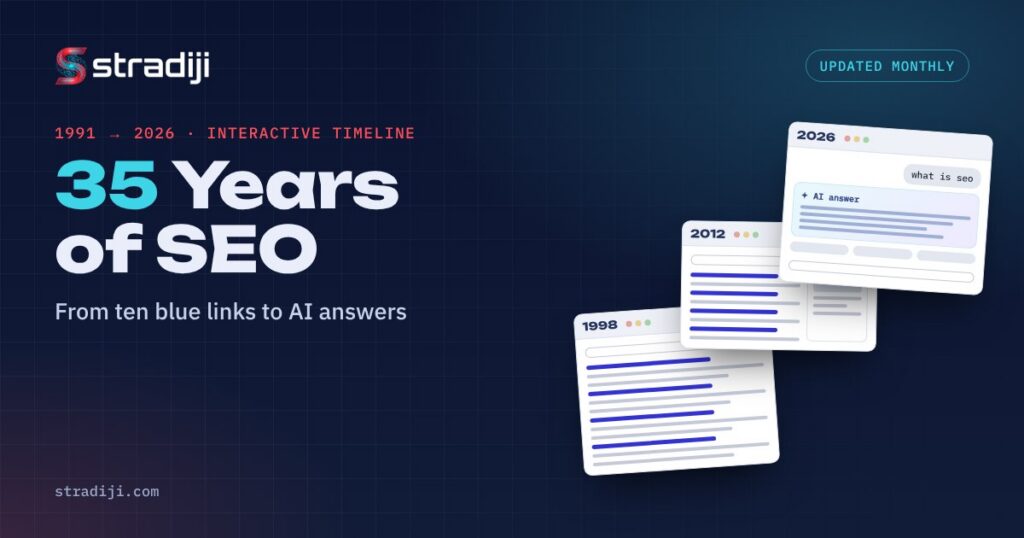
The tools we use weekly for these checks are in our paid and free SEO tools list. For how we got from PageRank to AI Overviews, see 35 years of SEO evolution.
Frequently asked questions
What are the most important Google ranking factors in 2026?
Relevance, helpful and trustworthy content, and authority from links and brand demand, all gated by crawlability and indexing.
Is there a newer Semrush ranking factors study than 2024?
Not as of Nov. 1, 2026. The latest we found is from January 2024. Treat it as a dated reference.
Do I need to optimize separately for AI Overviews?
Google says no: a page must be indexed and snippet-eligible. In practice, brand mentions and extractable answers raise your odds.
Do backlinks still matter for AI citations?
Yes for rankings, and rankings feed citations. But brand mentions correlated far more strongly with AI Overview visibility than backlink count in Ahrefs’ 2025 data.
Should I block AI bots in robots.txt?
Only on purpose. Blocking OAI-SearchBot keeps you out of ChatGPT search answers. Blocking GPTBot or Google-Extended affects training, not Google Search rankings.
One thing to do this week
Pick your five most important pages. For each, view the raw page source and search for the first sentence of your main answer. If it’s missing from the raw HTML, put it on your developer’s list this week. It takes 15 minutes and tells you whether half of the AI crawlers can even read you.
Is your site ready to be cited?
The GEO Score Card checks your site against the signals in the table above, from crawl access to entity clarity, and shows where you stand in a few minutes.

These May Also Interest You

The SEOs Diners Club · Weekly newsletter
Every Monday: what's actually moving in SEO and AI search
Mert Erkal breaks down one big shift each week, backed by real tests and data.
Free · 244 weekly issues since 2022 · Unsubscribe anytime


